In the last year or so I’ve learned an awful lot about just how much I never learned. My plan is to write up a short piece each day this month on an important or influential black figure from history beyond the whitewashed MLK/Rosa/Malcolm/G.W. Carver bits that we always got in school, because I think it’s important for white kids to know about things beyond themselves and it’s important for black kids to know things about themselves.
Ronald McNair
Plenty of little kids have astronauts as heroes. Neil Armstrong, John Glenn, and Sally Ride come to mind. My older brother, who is a huge nerd, once tried to fistfight me in a bar because he thought I had insulted Buzz Aldrin. Space is such a mystifying thing that it’s hard not to be enthralled by tales of the men and women who breach our atmosphere and explore it.
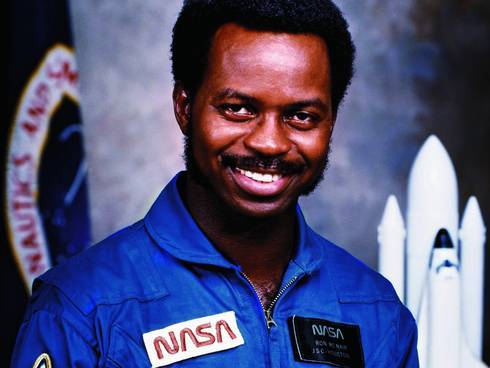
One name I had never heard until recently was that of Ronald McNair. McNair was one of the astronauts on the doomed Challenger launch 30 years ago, so when his name is mentioned, it’s usually in that context: as a tragic figure. But man, was he so much more than that.
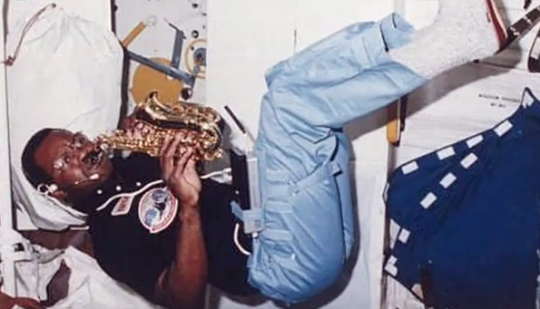
McNair was the second African-American to go into space. On his first trip, he played his saxophone on board, making him quite possibly the coolest person to ever board a space shuttle.
NPR’s profile of McNair from the 25th anniversary of his death goes into great detail about his refusal to let the odds dictate what he would and would not try. Perhaps no story about McNair says it better than this:
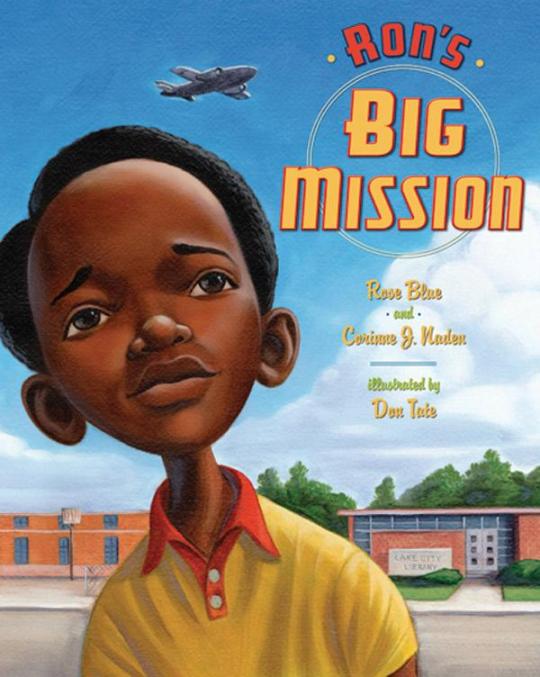
“When he was 9 years old, Ron, without my parents or myself knowing his whereabouts, decided to take a mile walk from our home down to the library,” Carl tells his friend Vernon Skipper.
The library was public, Carl says — “but not so public for black folks, when you’re talking about 1959.”
“So, as he was walking in there, all these folks were staring at him — because they were white folk only — and they were looking at him and saying, you know, ‘Who is this Negro?’
“So, he politely positioned himself in line to check out his books.
“Well, this old librarian, she says, ‘This library is not for coloreds.’ He said, ‘Well, I would like to check out these books.’
“She says, ‘Young man, if you don’t leave this library right now, I’m gonna call the police.’
“So he just propped himself up on the counter, and sat there, and said, ‘I’ll wait.’ ”
McNair graduated from North Carolina A&T and went on to MIT, where he earned his Ph.D. in physics. He applied and was accepted into the astronaut program. He had planned to teach physics at the University of South Carolina, one of the schools that had turned him down for undergrad because of his race, when he returned from the Challenger mission.
That dream was never realized, but in its place, his family established the McNair Scholars Program, which has helped more than 60,000 disadvantaged students attend college since that tragic day. A ridiculously brave man with a ridiculously strong legacy.

 Mooncustafer