“Imagine you were starting a discussion on your favorite pasta. but not with a particular person, just kind of out in the open so everyone can hear. so you get started discussing your noods and someone breaks in and asks you to define and explain everything about pasta before you can even get to what your favorite is and what you love about it. next thing you know, hours have passed and you’re still trying to explain how eggs become noodles and you’re no closer to your point than you were before. and on top of that, every previous time you’ve tried to discuss why you’re so into spaghetti carbonara, this same person, or someone just like them, stops you every sentence to have you define terms and make clarifications about pasta. you know for a fact that these folks are actually anti-pasta, because they’ve not only said as much, but they’ve argued against pasta plenty of times. after months of this, you stop allowing yourself to be interrupted and immediately the cry goes out “but how am i supposed to learn about pasta and noodles if you won’t teach me?!” you’re not having a conversation, you’re having a series of interruptions designed to waste your time and wear you down.”
— Ben Fegan on why some folks are losing patience for “debate” over time. Not meant as an attack on those not losing patience.
I literally just find stuff like going through illuminated manuscripts (this one’s 179 pages) into the wee hours sometimes. They aren’t labeled, tagged, or marked in any way. No one told me they were there. And then I find something like this, and I get to share it with all of you.
Am I correct in thinking she’s one of those Black mermaids some people claim shouldn’t exist in fiction?
These are basically baked frosting. So I added chocolate chips to half the batch, because why not?
They came out all right. I tried the two-spoon technique for dropping them onto the pan this time, and that….maybe worked better? It’s difficult to say. I baked them for two minutes longer than recommended and they were still kind of soft in the middle, but given they have no egg in them, being not entirely firm in the middle isn’t really an issue.
As you can see, I may have recycled the parchment paper from the challah when I baked the cookies. 😀 Waste not want not, you know.
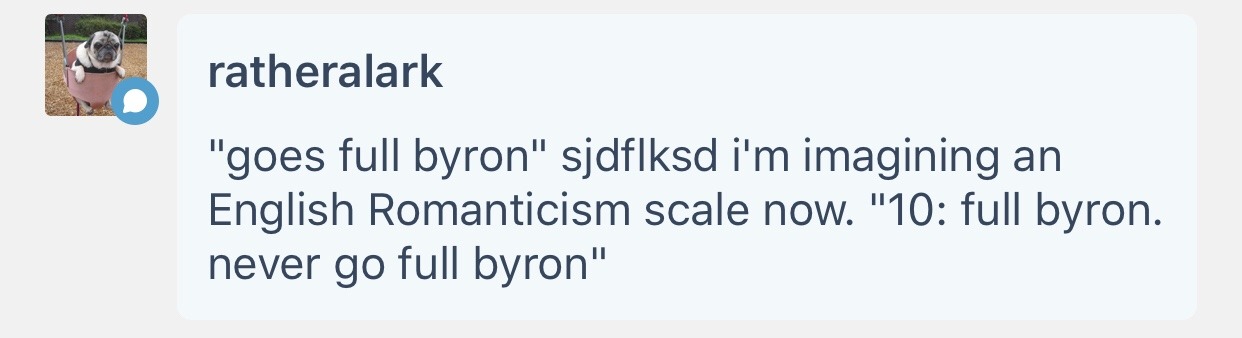
Oh my God I’m not sure of the accuracy of this scale but I made one anyways.
1: Jane Austen. Theoretically Romantic, mostly a clever satirist more interested in the novel as the perfect vehicle for social commentary than in poetry for capturing emotion. Very little chance of swooning and/or dramatic death. A very safe spot on the Romanticism scale.
2: Dorothy Wordsworth: Actually a Romantic, though not excessively so! Enjoy your long walks in the country. Keep those diaries. Your brother can mine them for publishable material until people consider them finally worthy of academic interest a century or two later.
3: Wordsworth. May result in later becoming annoyingly conservative but mostly harmless. Go ahead and wander lonely as a cloud. Gaze upon that ruined abbey.
4: Charlotte Turner Smith. Recover that English sonnet and transform it into a medium that mostly expresses sorrow! Help establish Gothic conventions! Have what Wordsworth called a true feeling for rural England! Die in penury and be forgotten by the middle of the nineteenth century!
5: Blake. ?? Who even knows man. Talk to angels. Create your own goddamn religion. Confuse all of your contemporaries.
6: Mary Shelly. Go ahead and run off with that unhappily married poet who took you on dates to your mother’s grave, but this may result in carrying your husband’s calcified heart around in a fragment of his last manuscript the rest of your life. But also, arguably inventing sci-fi as a genre… so that’s some consolation.
7: John Keats: listen to that nightingale but be forewarned: you will die of TB in Rome and everyone will mock you for dying of bad criticism instead of, you know, infectious disease.
8: Coleridge. May result in never finishing a poem and a severe opium addiction.
9: Percy Shelly. May result in being expelled from Oxford and in premonitions of your own death by drowning.
I put the description of some merch on the Neutral Milk Hotel official website into google translator to see if I was misunderstanding something or if it really made zero sense, and I accidentally set it as French to Italian instead of English to Italian.
The ‘translation’ reads: WE ARE HAPPY TO WELCOME YOU INTO THE HEART OF THE WORLD.
THIS IS SO EERIE ALEXA PLAY AEROPLANE OVER THE SEA
to be honest you pretty much got it with essgee utopia and OH my god i love it
i went to see it on my own and the first thing i noticed when i walked in was “okay why the hell can i hear a glockenspiel and a piano in the orchestra pit, i might not know utopia that well but i know it well enough to know that neither of those instruments are present in the score”. Turns Out that the reason i head a glockenspiel and a piano was that the musical director had rescored the whole thing, in a modern musical theatre style, to better fit both the performers and the setting. when will your fave ever?
note on better fitting the performers: wmos is a musical theatre society, not an opera society, so vocally their style suits a more musical theatre (stephen turnbull deemed it bossa nova) style than the original music style. on top of that, they had a chronic lack of men, as sometimes Tragically Happens. there were no men in the initial portion of act i, and their chorus of men eventually totalled two (yeah.), with four male flowers of progress and two of the flowers of progress (i can’t tell them apart so don’t ask me to) commuted to women.
i should point out: rather than the usual flowers of progress, the flowers of progress were as follows:
kate middleton
prince william
prince andrew
prince charles (mr. goldbury)
camilla parker-bowles (the flower of progress who hangs out with mr. goldbury and the princesses during act ii)
prince harry (fitz)
this also meant that princess zara was implicitly meghan markle, but she kept the name zara. there were people who complained about it (“grumble grumble, mocking the royal family, would never have happened in the old d’oyly carte, grumble grumble”). but i’m going to guess those people have yet to work out the fact that gilbert and sullivan is, by nature, satirical. so those people don’t count.
other changes included lady sophy being mary poppins, rewriting lyrics of various songs, including “a wonderful joy our eyes to bless” being turned from casual racism into prince charles singing a love song in favour of camilla parker-bowles (which was HILARIOUS, and his impression was spot on). also one thing i particularly liked was the fact that this meant that the two younger princesses didn’t end up hooking up with men old enough to be their fathers, so a wonderful joy and the quartet were more paternal than they were creepy.
don’t get me wrong, i love the quartet because it’s the least dull part of a dull act of a dull show. but at the same time, it is just objectively creepy that these two guys are flirting with two extremely innocent and sheltered young women who are young enough to be their daughters. but i digress.
the gay report: scaphio and phantis (who i still can’t tell apart but i met the one who wants to marry a translucent woman and he was incredibly nice and really pleased to hear that somebody enjoyed his opera) got together at the end. also, and i thought this was nice, tarara was nonbinary. that’s just about it for Things Being Gay but it made me pretty happy. (and it’s pretty remarkable that this is one of the last things i am talking about rather than the first, since You Know Me.)
anyway, and i’m sure you have heard this by now, the f u c k i n g adjudicator absolutely destroyed them. i didn’t stay because frankly i don’t care to hear anybody’s opinions on a show i liked (although i do agree that the choral singing could have used work), but on top of the fact that he didn’t even nominate them for any awards let alone give them any during the adjudication he not only didn’t say anything good (and, objectively, even if you despised it in every other way, eagle high, which is a particularly difficult chorus, was excellent), but said that he wasn’t even going to comment on the principals. also people applauded when he completely ripped them apart.
now don’t get me wrong, me personally, if an adjudicator completely destroyed something i had spent months working on, i would just go more in the direction that he had hated next time around. you didn’t like my modern musical theatre utopia? well then, sir,
WELCOME TO MY FUCKING HEAVY METAL MIKADO, THAT YOU, FOOL THAT YOU ARE, BROUGHT DOWN DIRECTLY UPON YOUR OWN HEAD
but that’s just me, and because i am a self-confessed Petty, Opinionated Asshole, i can quite see that not everybody would amp up the Controversy all the way not just to eleven but to twenty while making direct and confrontational eye contact with the adjudicator.
(this is in much the same vein as the reason i was Fucking Mad when last year’s adjudicator described a company as being “too young”, too fucking young, because their average age was in their 30s. my response to this is next year: iolanthe with a cast made up entirely of seven year olds. celia (or leila) stares straight at the adjudicator when she says “no-one to look at you would think you had a son of twenty-four!”) somebody slightly less… i don’t know what the word is but there is one and it’s probably “stupid” or “self-destructive” than me would probably be more inclined to move away from the festival and not bring anything there, and it would probably discourage the majority of people with similar ideas from trying to present their ideas at the festival, because why bother if it’s just gonna be destroyed. but that’s an opinion for another post and, indeed, for another day.
anyway tl;dr i thought it was good although there were some bits that needed work as well as there being one or two jokes that didn’t land. however, the audience and adjudicator reaction to it is indicative of the wider problem with gilbert and sullivan as a whole. if i were teaching a highly specific class about Updating Theatre i would use it as a case study.
and now I want Metal Mikado, because imagine the Punishment and Crime song
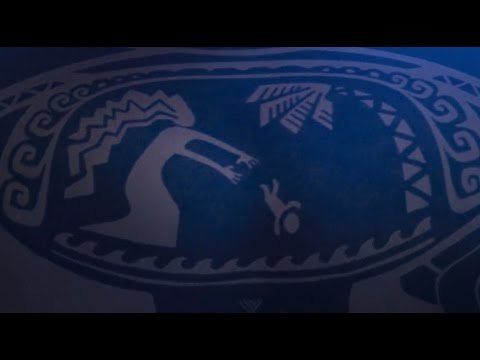
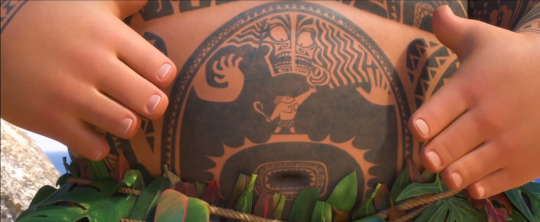
I still think Moana deserved an Oscar for this part
To me, the moral of Moana is that only women can help other women heal from male violence.
The movie starts with the idea that the male god who wronged Te Fiti must be the one to heal her. This seems to make a certain sort of intuitive sense in that I think we all believe that if you do something wrong you should try to make it right. But how does he try to right it? Through more violence. Of course that failed.
It was only when another woman, Moana, saw past the “demon of earth and fire” that the traumatized Te Fiti had become (what a good metaphor for trauma, right?) and met her with love instead of violence that she was able to heal. Note that they do the forehead press before Moana restores the heart, while Te Fiti is still Te Kā. Moana doesn’t wait for her beautiful island goddess to appear in all her green splendor before greeting and treating her as someone deserving of love.
Moana is only able to restore the heart because Te Kā reveals her vulnerability and allows Moana to touch her there. Maui and his male violence could only ever have resulted in more ruin.
This is a touching anaylisis but it’s extremely racist as
not only have you completely ignored the whole point of Maui’s character, but
have managed to incriminate a man of color on a tumblr wide scale.
First of all, Maui’s character does not represent male
violence—it represent human greed. Maui did not take the heart because he is a
man, and Te-Fiti is a woman. He took it because the humans asked him to. The humans asked Maui to do everything for them,
not caring how greedy or selfish their requests were and in the end it was Maui
who suffered for it. Maui is supposed to show the flaw of humanity.
This has nothing to do with sexism, it has everything to do
with the fact that Maui gave and gave to the humans who could never stop being
greedy. Moana giving the heart back wasn’t supposed to be her “making up” for
the male violence that Maui represents. It was her making up for the greed she
and her people represent. It was touching however because yes it was an
important moment between two women, but you missed the point and you’ve come off
racist and very disrespectful to a culture at that.
Yes, Moana is an empowering movie for women, especially
women of color. But the last thing this is about is Maui being an abuser/rapist
or whatever. That is not the point of Maui’s character.
And to assume so is racist. You are a white woman completely
dehumanizing a man of color and ruining his image because of how you see him. And other white girls here
on tumblr have happily picked up that image and interpretation and rolled with
it. Maui’s character is now seen as an abuser or as someone who is violently
because of white girls here on tumblr—which it doesn’t surprise me. (an in a
historical context this is even MORE racist because white women would always
make Maui’s people out to be savages and abusers etc., simply because of the
color of their skin and their culture so yea, this is bad).
You can see the morality of the movie however you want, but
do not be disrespectful toward a character and in this case a culture.
@i-want-cheese Please don’t write this off as another “butthurt comment” or
“male guilt”, because this is really messed up. I see how you’re brushing off
some other people’s comments and I honestly hope that you don’t see mine the
same way because this is an issue I think you need to face/realize. You are
being racist and brushing it off isn’t going to change that.
the
@visibilityofcolor THANK YOU FOR THIS. As a Polynesian woman, reading that post and other replies painting Maui and even Tui as aggressive and violent men had me feeling some type of way, especially since White people have always regarded Polynesian men in such a manner.
I’ve thought about replying because I’m tired of seeing these kind of “Moana is a feminist movie” posts collect hundreds of notes despite the fact that these posts always conveniently fail to mention Pasifika people, but it always stressed me out, so thank you.
As an aside, Maui taking Te Fiti’s heart and Moana restoring it was symbolic of environmental preservation. Because the people who inspired Moana–Pasifika people, not just Polynesian–are always affected first when the environment is threatened. Our way of life is greatly influenced by the ocean and we believe that if you take care of the ocean, she will take care of you.
You’re very welcome.
This is insight for me as well (as I wasn’t aware that the movie also came fro the culture of the Pasifika people), and does give a very important perspective. I do agree with you, this movie is about environmental restoration, not some white fem bullshit.
I tried over and over again to explain to I-want-cheese about how she was being racist, but she responded by blocking me and other poc who called her out (even other polynesian people). People to this day are still trying to explain that she is being racist and culturally insensitive but she ignores us.
I’ve made a few posts about this, hoping that people realize how problematic it is to agree with i-want-cheese. Explaining to her racist white ass that this was problematic was like explaining to a bird. She wouldn’t listen and neither would have of her racist friends.
Sorry you’ve had to see this on your dash every so often, but I’m glad my portion of the post is starting to get around. (reblogged to the wrong blog at first lols)
dang reblogging this as a correction for the very first reblog. this why feminist analysis always needs to be intersectional
My heart just cried
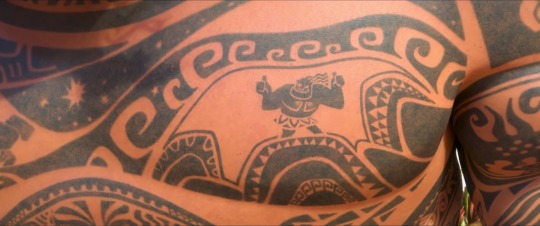
the portrayal of Maui is super important here, the disney crew put a LOT of effort into getting him right because he IS a crucial figure to an entire culture- basically a cross between a central religious figure and superman so handling him poorly would be catastrophically disrespectful
there are basically only two parts of Mauis legend that they flub- they only tell half of the story of when he was abandoned as a baby, and they skip over that stealing the heart of
Te-Fiti
so he could give it to humanity was the legend in which he dies
yes, canonically Maui dies in his quest to give gifts to humanity, its an important element of why Maui is such a profound character, not just ‘man who hurt someone’ strawman
it gets worse when you discover the OTHER legend they fudged, the story of his birth, reinforces this.
Mauis mother had several (Hawaiians only say three, new zealand says five) sons, all named Maui, so when she had ANOTHER son she named him Maui as well, but then cast him into the sea for there was no way she could support another son. the gods did not save Maui, as Moana says, instead they return him to his mother and say she must give him a chance. to which his mother states that for her to take care of him this infant must remove the roof from her house by throwing spears at it.
that is the story of Maui the skillful, abandoned as an infant and then immediately told that he must PROVE his worth, after which all he ever does is prove his worth
his brothers mocked him for being a poor fisherman, he crafts a fishook
from a jawbone and proceeds to raise new islands from the sea
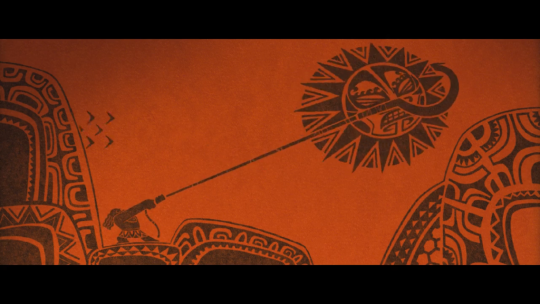
the sky is so low the trees bend, maui raises it for everyone, then fills the new sky with wind
the sun flies so quickly there is not enough time in the day to do the
labors for everyone, maui has to lay traps for each of the suns many
feet, chase after it as it was slowed, and then threaten to chop its
legs off if it would not slow down
he then due to the complaints
of the now longer dark night creates the moon and is upset his creation
will not please humanity for it does not make sufficient light, then
shows it to the sun so that it may learn how to be bright
maui
was credited with having invented as gifts for humanity the outrigger
canoe, stone tools, and seaworthy boats that had no mast or sails. he was credited
with inventing tattoos as a gift to dogs, however
humanity is still not content so maui descends to the land of the dead to ask the secret of creating fire from the grandmother, who kept it hidden in her fingernails. he dropped the fingernail in the water as he tried to return to the land of the living, came back for another, dropped it as well, and went through all ten fingers and toenails untill he had to then interrogate birds the grandmother had shared the secret with to tell him how
a monstrous eel tried to put the moves on his wife, and again maui had to prove his worth to reclaim her by breaking the monster eel’s spine, shoving him into the ground to create the first coconut tree, the single most useful thing for polynesian life, as a gift to humanity yet again
Maui, as a mythological figure, did nothing but give from the day he was born. he gave humans tools, land, fire, boats, light, the wind, everything except life itself and he even tried to give them that- and it killed him, he was bitten in two
a crucial part of Maui as a legend is that he failed, its literally part of the point, also that he was driven to prove himself endlessly to the (during his life) ungrateful.
do not try and drag Maui, its disrespectful on a level i cant express
thank the man, you asshole
Moana succeeded where he failed, for she saw that she did not have to prove herself. the whole movie up untill then she was trying to put on a brave face (there was literally a cut song ‘warrior face’ where maui teaches her Haka), shout her courage, announce to the world at large that she WILL do the thing and fix the world and be the hero, just like Maui
its easy to miss, she stopped trying to prove who she was to anyone, there was nobody she needed to prove herself TO
she just WAS herself, and that brought her peace
Oh man…this is why it’s so important to hear the perspectives of the peoples actually represented. When I was reading through this, the first part seemed to make a lot of sense on the surface, but I could *never* have imagined how racist that perspective was. It makes so much more sense now. Thank you to the folks in this thread who were willing to take the time to share their perspective so that oblivious folks like me could do a little more to chip away at our own internalized racism.
The further we go back in time, the easier it is to forget that ancient people were, well, people. The most well-known texts of the Ancient Near East are royal inscriptions, decrees, treaties, hymns, inventory lists, and other documents that don’t tell us much about everyday life. Once in a while, a more relatable text will be discovered and shared around: most of Tumblr has heard about Ea-Naṣir and his subpar copper, for example.
But what most of Tumblr doesn’tknow is that this kind of text is far from rare. The correspondances of Mesopotamian merchants are abundantly preserved, and yes, that involves a lot of complaining, bargaining and justifying. And these texts are not alone! From letters to prayers to dream diaries, the ancient Near East is full of small glimpses into the private lives of its inhabitants.
Curious to see some examples? Let me take you to Anatolia (now Turkey) in the second millennium BC.
Enter Lamassī. Lamassī is the wife of an Assyrian merchant who regularly travels to Kaneš, in Anatolia, to trade. She is involved in her husband’s business, often sending him goods to sell, and she can even write. Of course, she isn’t just a businesswoman. She’s also a parent, and like most parents, her children come first:
As for why I didn’t send you the textiles you wrote about, please don’t be angry. Because the little girl is grown up, I had to make a pair of thick textiles for the chariot. I also made some for the household members and for the children. That’s why I wasn’t able to send you the textiles.** (CCT 3, 20)
Here we can glimpse a very mundane event: Lamassī’s little daughter isn’t so little anymore, so she has to use the textiles that were meant to be sold for “the chariot” (possibly involved in a coming of age ceremony) instead. Notice how she jumped on the occasion to give textiles to the rest of the household as well!
Next, let’s move further north and fast forward a few centuries. Tarḫunmiya is a scribe working for the Hittite king: one of his responsibilities is to write the king’s letters to the town of Tabikka. Many of these letters have small sections at the end, where Tarḫunmiya writes his own message to the scribe at the other end. At least once, it’s to ask for a bit of help:
Thus speaks Tarḫunmiya: tell Uzzu, my dear brother: may the Gods maintain your life, and may they keep you well and safe. My stylus from the scribal school is broken/lost. My dear brother, send me a stylus from the scribal school. (Mşt. 75/111)
It’s unclear what exactly happened to Tarḫunmiya’s stylus, as the verb he uses literally means “to perish”. Either way, he’s in a sticky situation – what’s a scribe without his writing instrument?
Moving away from letters, one of the most interesting collections of Anatolian texts we have is dream accounts. Many of these can be attributed to Puduḫepa, one of the most – if not the most – powerful Hittite queens. She’s known for being a shrewd, diplomatic and resourceful politician. But some of her dreams reveal quite a different picture:
And the horses […] were going to trample me. I, the queen, sat down and I started to scream. The horse drivers kept laughing at me. In the end, they did lead those horses away. None of them trampled me. None of them peed on me. (CTH 584)
Here Puduḫepa finds herself in a nightmare we can all recognise: something embarrassing has happened and everyone is laughing. Here she’s not Puduḫepa, queen of Ḫatti – she’s just a human being, vulnerable and afraid of being humiliated.
Lastly, let me take you to the bedside of an old man. His name is Ḫattušili, and he is the founder of the Hittite kingdom; but now he’s sick, and he has called a scribe to write down some last instructions before he dies. The ending doesn’t sound like the conclusion of a political document. Rather, it’s probably Ḫattušili’s confused, anxious last words:
I’m making my words known to you: wash me well, hold me to your breast, yes, to your breast… Protect me from the earth. (CTH 6)
A scribe took this down in the 17th century BC – probably without even expecting to hear it – and thirty-eight centuries later, we can still read it. The whisper of a dying king.
Because even in the Bronze Age, people were people. History has always been human.



 Mooncustafer