You know, this scene is so powerful to me that sometimes I forget that not everyone who watches it will understand its significance, or will have seen Casablanca. So, because this scene means so much to me, I hope it’s okay if I take a minute to explain what’s going on here for anyone who’s feeling left out.
Casablanca takes place in, well, Casablanca, the largest city in (neutral) Morocco in 1941, at Rick’s American Cafe (Rick is Humphrey Bogart’s character you see there). In 1941, America was also still neutral, and Rick’s establishment is open to everyone: Nazi German officials, officials from Vichy (occupied) France, and refugees from all across Europe desperate to escape the German war engine. A neutral cafe in a netural country is probably the only place you’d have seen a cross-section like this in 1941, only six months after the fall of France.
So, the scene opens with Rick arguing with Laszlo, who is a Czech Resistance fighter fleeing from the Nazis (if you’re wondering what they’re arguing about: Rick has illegal transit papers which would allow Laszlo and his wife, Ilsa, to escape to America, so he could continue raising support against the Germans. Rick refuses to sell because he’s in love with Laszlo’s wife). They’re interrupted by that cadre of German officers singing Die Wacht am Rhein: a German patriotic hymn which was adopted with great verve by the Nazi regime, and which is particularly steeped in anti-French history. This depresses the hell out of everybody at the club, and infuriates Laszlo, who storms downstairs and orders the house band to play La Marseillaise: the national anthem of France.
Wait, but when I say “it’s the national anthem of France,” I don’t want you to think of your national anthem, okay? Wherever you’re from. Because France’s anthem isn’t talking about some glorious long-ago battle, or France’s beautiful hills and countrysides. La Marseillaise is FUCKING BRUTAL. Here’s a translation of what they’re singing:
Arise, children of the Fatherland! The day of glory has arrived! Against us, tyranny raises its bloody banner. Do you hear, in the countryside, the roar of those ferocious soldiers? They’re coming to your land to cut the throats of your women and children!
To arms, citizens! Form your battalions! Let’s march, let’s march! Let their impure blood water our fields!
BRUTAL, like I said. DEFIANT, in these circumstances. And the entire cafe stands up and sings it passionately, drowning out the Germans. The Germans who are, in 1941, still terrifyingly ascendant, and seemingly invincible.
“Vive la France! Vive la France!” the crowd cries when it’s over. France has already been defeated, the German war machine roars on, and the people still refuse to give up hope.
But here’s the real kicker, for me: Casablanca came out in 1942. None of this was ‘history’ to the people who first saw it. Real refugees from the Nazis, afraid for their lives, watched this movie and took heart. These were current events when this aired. Victory over Germany was still far from certain. The hope it gave to people then was as desperately needed as it has been at any time in history.
God I love this scene.
not only did refugees see this movie, real refugees made this movie. most of the european cast members wound up in hollywood after fleeing the nazis and wound up.
paul heinreid, who played laszlo the resistance leader, was a famous austrian actor; he was so anti-hitler that he was named anenemy of the reich.ugarte, the petty thief who stole the illegal transit papers laszlo and victor are arguing about? was played by peter lorre, a jewish refugee. carl, the head waiter? played by s.z. sakall, a hungarian-jewwhose three sisters died in the holocaust.
even the main nazi character was played by a german refugee: conrad veidt, who starred in one of the first sympathetic films about gay men and who fled the nazis with his jewish wife.
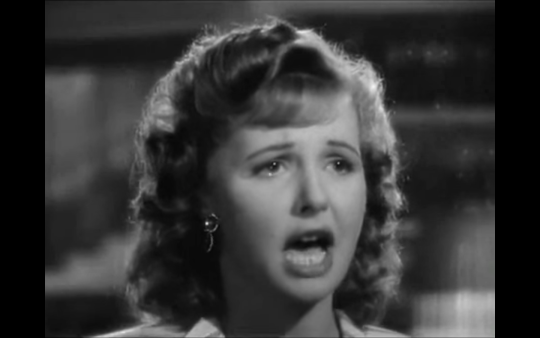
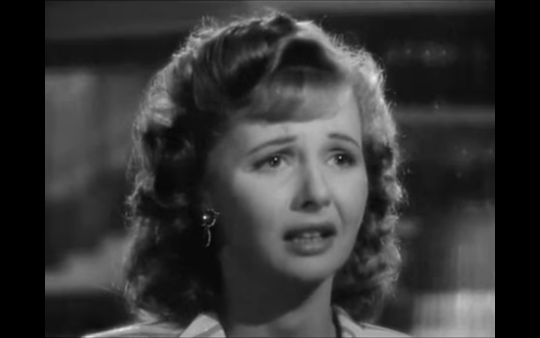
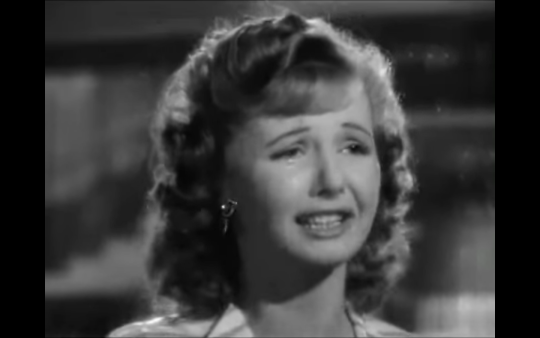
there’s one person in this scene that deserves special mention. did you notice the woman at the bar, on the verge of tears as she belts out la marseillaise? she’s yvonne, rick’s ex-girlfriend in the film. in real life, the actress’s name is madeleine lebeau and she basically lived the plot of this film: she and her jewish husband fled paris ahead of the germans in 1940. her husband, macel dalio, is also in the film, playing the guy working the roulette table. after they occupied paris, the nazis used his face on posters to represent a “typical jew.” madeleine and marcel managed to get to lisbon (the goal of all the characters in casablanca), and boarded a ship to the americas… but then they were stranded for two months when it turned out their visa papers were forgeries. they eventually entered the US after securing temporary canadian visas. marcel dalio’s entire family died in concentration camps.
go back and rewatch the clip. watch madeleine lebeau’s face.
casablanca is a classic, full of classic acting performances. but in this moment, madeleine lebeau isn’t acting. this isn’t yvonne the jilted lover onscreen. this is madeleine lebeau, singing “la marseillaise” after she and her husband fled france for their lives. this is a real-life refugee, her real agony and loss and hope and resilience, preserved in the midst of one of the greatest films of all time.
I remember when I first saw Casablanca, and being struck by this scene, and that was without knowing the history behind it or all that Madeleine Lebeau – and so many more refugees- had suffered.
Do yourself a solid and watch this film. Watch this scene. And most of all, remember refugees, the ones who lived then and especially the ones who live now.
Look at these uncivil people harassing these gentlemen into leaving a bar, it’s shameful.
Mycena Interrupta, also known as Pixie’s Parasol, is a small non-bioluminescent mushroom found in and around Australia. It’s very fragile and grows in small colonies on rotting wood, primarily in temperate, rainy areas. It is the only blue Mycena.
being a non native english speaker and having picked it up through a lot of different things is pretty funny because you end up using words like “y’all” and “whilst” in the same sentence. keeps native speakers on their toes
So the folks on Ravelry’s LSG forum are quickly becoming some of my favorite people on the Internet. They enabled the fiber-wrangling wonder that is SkyKnit, feeding it a dataset of knitting patterns to learn from and then turning its mistake-prone patterns into hilarious reality. They’re hard at work collecting a dataset of crochet hats for SkyKnit’s sibling, HAT3000. And it turns out there’s an (also 18+) sister group of LSG folks who are also nail polish fanciers, and who have amassed large personal lists of nail polish colors. Why? I don’t know, but it’s a machine learning algorithm’s dream.
The nail polish fanciers (the group is called “There’s Fiber in My Polish”) graciously contributed their name collections to the cause, filling a spreadsheet with several thousand entries in just a few hours. I already knew that neural networks can generate paintcolors, but this is the first time I’d tried to get colors out of a neural network that was previously trained on metalbands.
Thanks to its head start on the rules of spelling English words, this algorithm didn’t go through the usual alphabet soup phase of learning about vowels and spaces. It did, however, go through an initial phase where it produced nail polish colors like this:
Murder Earth Blue Slaughter All Death Bear Hollow Orange Flay Pink Silence I Dared Sacred Rose Mange Opal You Death Pink The Foull Sea of Leather Stray Color Eye Claw Green Chambers of Flame Shades of Flesh Brutally Bright Mind Machine Blue Dirty Flesh Night Burphouse of Poppy Transis
As it learned more about nail polish names, though, it gradually forgot about its dark past – this phenomenon is called “catastrophic forgetting” and is part of the reason that machine learning algorithms have to specialize at one task at a time.
It started creating polish names that were actually pretty believable:
Purple Skystone Shimmerelle Sweet Eclipse Neon Sunshine Fire In the Starry Fell Moonland Purple That Orange Spice OMG Power Indigo Dragon Flame Dust Plummerine Teal Moon Sunblaster Neon Pow
Several would also make good names for punk bands:
Ink Flame Electric Frost Blue Wine Fire Splat Batberry Lime Force Bike String Neon Mint Alice Twilight Mashery Charming Machine Butter Street Mind Sparkle Shattered Girls Lead Not the Poppy
Nail polish names can be very strange (“I’d never eat your brains,” “Hands Off My Kielbasa!” “My Gecko Does Tricks,” “Fishwife”), but these would give even the strangest a run for their money:
Bloshing Glip Pants of Sun Bat in Love Grinch Pink Clearly Stare’s Hoot Mews, New Universe Science Stars Pickwool Mint Space Holly Gold Be Tangeling The Green is In the Be Glitter Metallic With All of the Alive Pant Summer Up of the mangle Don’t Man Splat Grape Have Dorkanna Angel Wants Magic Sharker I’m the Sunshiple Little Dangest Street Dance Pants Pickles Green Candy in Santa Girls Burblipp Collide Loopstorm Ink-Orange Me, Orange Chunky The Midnight Doodle What Hello Glake Decisonator
And of course there was an entire category of names that will probably not catch on.
Love Rot Fail Pink Wart Boy Blood 204 Dead Pearl Social Mace Mooned Black Old With Anger Suffering Lights Acid Touch Green Evil Gold Charming Tick Diamond Flesh Song of the Booty Sorry Green Fail The Baby Sore Love Diamond Pink Ashes in the Green Creamscrap Golden Bop Dragon
You can already order neural network-generated nail polish colors – Dreamland Lacquer is selling Stanky Bean, Clay Cow, Dorkwood, Copper Panty, and Light of Blast, all paint colors that were generated by a neural network: see here and here.
Bat in Love better be like sparkly neon pink with little bat glitters embedded in it.
I Dared, Sea of Leather, Twilight Mashery, Charming Machine,
Blood 204, Dead Pearl, and Old With Anger would all be perfectly normal BPAL perfume names.









 Mooncustafer