I have defended men and women on death row for nearly
all of my thirty years as a lawyer, and have represented people caught
up in the excesses of the “war on terror” since very shortly after that
war was launched. For more than a decade, I have been counsel for Zayn
al-Abedin Muhammad Hussein, known more widely as Abu Zubaydah. Abu
Zubaydah was the first person immured in a “black site,” the clandestine
prisons operated around the globe by the CIA from early 2002 to late
2006. He was the first prisoner to have his interrogation “enhanced,”
and the only person subjected to all the DOJ-approved interrogation techniques, as well as a number that were never approved (including, for example, rectal rehydration). The infamous torture memo was, in fact, written specifically to legitimize Abu Zubaydah’s torture.
At the time of his capture and for
years afterward, government officials took great pains to demonize Abu
Zubaydah in order to justify his abuse. “The other day,” President
George W. Bush announced at a Republican fundraiser in April 2002, “we hauled in a guy named
Abu Zubaydah. He’s one of the top operatives plotting and planning
death and destruction on the United States. He’s not plotting and
planning anymore. He’s where he belongs.” Various senior administration
officials described Abu Zubaydah in comparably colorful terms.
These pronouncements, however, are not what set the torture scandal into motion. For that, we can thank a “psychological assessment”
written by unnamed CIA officers and faxed to John Yoo, the Justice
Department lawyer who was the lead author of the torture memo. This
document described Abu Zubaydah as “the third or fourth man in al-Qaida”
and “a senior Usama Bin Laden lieutenant”
who had been “involved in every major al-Qaida terrorist operation” and
was “a planner of the 11 September hijackings.” He “managed a network
of [al-Qaeda] training camps,” “directed the start-up of a Bin Laden
cell in Jordan,” and “served as al-Qaeda’s coordinator of external
contacts, or foreign communications.” He was also alleged to be “engaged
in ongoing terrorism planning against US interests.” For good measure,
he had supposedly written the organization’s “manual on resistance
techniques” and had a particular expertise in thwarting conventional
interrogations. It was this assessment that provided Yoo with the
“facts” needed to legalize the unlawful and rationalize the unthinkable.
And so Abu Zubaydah was tortured. As
often as it has been repeated, the litany of this torture is still
shocking. His captors hurled him into walls and crammed him into boxes
and suspended him from hooks and twisted him into shapes that no human
body can occupy. They kept him awake for seven consecutive days and
nights. They locked him for hours in a freezing room. They left him in a
pool of his own urine. They strapped his hands, feet, arms, legs,
torso, and head tightly to an inclined board, with his head lower than
his feet. They covered his face and poured water up his nose and down
his throat until he began to breathe the water, so that he choked and
gagged as it filled his lungs. His torturers then left him to strain
against the straps as he began to drown. Repeatedly. Until, just when he
believed he was about to die,
they raised the board long enough for him to vomit the water and retch.
Then they lowered the board and did it again. The torturers subjected him
to this treatment at least eighty-three times in August 2002 alone. On
at least one such occasion, they waited too long and Abu Zubaydah nearly
died on the board.
The “facts” recounted above to justify this torture were all false.
Abu Zubaydah was no lieutenant to Osama bin Laden. He held no position
in al-Qaeda, senior or otherwise. He had no part in September 11 or any
other al-Qaeda operations. He did not operate a network of al-Qaeda
camps, open an al-Qaeda cell in Jordan, or manage al-Qaeda’s external communications. He did not draft any resistance manual, for al-Qaeda or anyone else, and had no special expertise in resisting interrogations.
The government no longer maintains that these assertions are true, and now concedes that Abu Zubaydah was never a member of al-Qaeda.
This was the conclusion of the
Senate Select Committee on Intelligence, which undertook the most
meticulous study of the torture scandal to date, eventually publishing a
500-page summary of its findings. The drafters reviewed more than six
million pages of contemporaneous records, from the CIA and other
sources, and concluded there was no support for any of these assertions.
The CIA has likewise admitted error, and now affirms that Abu Zubaydah
was not part of al-Qaeda. This is also the conclusion of the United
Nations Security Council, which has removed Abu Zubaydah from its
Islamic State and al-Qaeda sanctions list, based on the earlier
recommendation of the UN ombudsman,
who similarly concluded that Abu Zubaydah was not a member of al-Qaeda.
And years ago, the Department of Justice withdrew all allegations that
Abu Zubaydah had a connection to the September 11 attacks or played any
part in al-Qaeda’s terrorism.
When I point this out, many people ask whether I am claiming that Abu Zubaydah is “innocent.”
Here, they mean innocence in the Hollywood sense—the
wrong-place-wrong-time sort of innocence that has acquired such purchase
in American life. Do I maintain that Abu Zubaydah is innocent?
This preoccupation with my client’s innocence reminds
me of conversations I have often had about capital punishment. The
question that occurs to many people when they reflect on the death
penalty is whether he (it is almost always a he) “did it.” Other
questions—about the limits of state power, the fairness of the penalty,
and the legality of the proceeding—simply do not arise. They do not
matter so long as the accused committed the offense. The plain fact of
guilt supersedes any constitutional qualms.
We have now brought this orientation
to the new world we once designated “post-9/11,” but now simply accept
as normal. Because the demonization of radical Islam has been
uncritically embraced by a significant portion of the population and a
great many of our elected officials, there is widespread (though not
universal) agreement that the federal government may do things to
followers of radical Islam that it would never do to a conventional
offender—even one the government would seek to execute, like a domestic
terrorist who blows up a federal building in Oklahoma City.
Thus, many people have come to accept that the government may “enhance” such a person’s interrogation in a way that their former selves would have called torture,
and that it may hold him on a remote island without trial or meaningful
legal process for the rest of his days. The only question that matters
is whether the person falls within the forbidden category. If he does,
then he is not “innocent”
and his special fate is not only justified, it is salutary, regardless
of the constitutional consequences. But if he does not belong to the
category of radical Islamist, then he can be considered “innocent” and may be spared.
The tragedy of innocence-speak,
whether in capital punishment or the post-9/11 world, is that it
encourages a childlike fantasy that we live among saints and demons. And
it compounds this folly by supposing that the challenge of our time is
merely to separate the two as accurately as possible. Having satisfied
ourselves that we have done so, we then grant the state the authority to
impose nearly any penalty on those who fall on the wrong side of an
imaginary line. The obsession with innocence encourages the
transmogrification of a human being into a character in a Marvel Comics
movie.
The short answer to the question “Is
Abu Zubaydah Hollywood-innocent?” is that it doesn’t matter. At least,
it shouldn’t. It shouldn’t matter in the legal sense, because if the law
were humane, it would not authorize the government to imprison someone
for the rest of his days unless he had some specific responsibility for
the event that triggered our entry into this endless war. And it
shouldn’t matter in the moral sense, because regardless of what he may
have done, regardless of whether he is “innocent,” we should not
authorize the government to treat him in a way that we would never
tolerate if it were done to a dog, or to imprison him incommunicado, in
a small, windowless cell, without charges or meaningful process, until
he dies, forgotten by a world that has long since moved on.
But we do not live in the world that
ought to be. We live in the world that is, and most people who ask
whether Abu Zubaydah is innocent are not satisfied with what they regard
as a non-answer. So for them, the answer is no.
Abu Zubaydah would describe himself as a mujahid, which means simply that he is engaged in jihad (literally, “struggle”). Like
many others, he has long believed he has a religious obligation to come
to the defense of other Muslims who have been attacked, even if the
attack comes from an entity as powerful as a government. He has believed
this for years, which is why he dedicated himself to the defense of
Muslims in Afghanistan during its war against the Communists. And it was
a piece of Soviet shrapnel that lodged in Abu Zubaydah’s brain in 1992
as he fought alongside his fellow Muslims against the Soviet-installed
puppet government.
Back then, Ronald Reagan called the mujahideen “valiant freedom fighters.” He said we supported the mujahideen, and would continue to support them as long as it was needed, because “their cause is our cause: freedom.” Reagan made sure the mujahideen received funding from the CIA, and American leaders thought men like Abu Zubaydah were heroes of the anti-Soviet resistance.
After the Communist government in Afghanistan collapsed, bickering factions dragged the country into civil war. Like most mujahideen, Abu
Zubaydah had no interest in a conflict that pitted Muslim against
Muslim. But there were other places around the world where Muslims were
under organized attack. Places like Bosnia. Because of his injury, Abu
Zubaydah could no longer serve as a soldier; he simply lacked the
physical and mental capacity. So he became a kind of mujahid travel
agent. He coordinated the travel of other Muslims into Pakistan, and
from Pakistan to a training camp on the Afghanistan-Pakistan border,
known to the West as Khalden.
Contrary to what the United States believed when its agents tortured Abu Zubaydah, the government now agrees that Khalden was not an al-Qaeda camp. Under bin Laden’s
influence, al-Qaeda considered any American a legitimate target,
including innocent civilians. Abu Zubaydah, however, like the vast
majority of mujahideen, rejected this extremist view; he believed
then, and believes now, that attacks on non-combatants, whether
American or otherwise, were and are explicitly forbidden by the Koran.
(This is also why he believes, like most mujahideen of his era, that the actions of ISIS are
an egregious violation of Islamic law.) Although Abu Zubaydah knew bin
Laden, the two held irreconcilably opposing views of Islam. The
ideological antipathy between bin Laden and the leadership at Khalden
was widely known among the mujahideen in Afghanistan and Pakistan. It was precisely because of this antipathy that bin Laden forced the Taliban to close Khalden in 2000.
Khalden trained Muslim men to fight
in the defense of other Muslims. The men who passed through the camp,
however, like people everywhere, were free agents who could use their
training as they deemed appropriate. Like most mujahideen,
the majority of Khalden trainees went to places like Bosnia to defend
Muslims under attack. Some, however, came under the sway of bin Laden
and moved to camps run by al-Qaeda. And some of these men would later be
recruited by al-Qaeda to take action against the United States. But the
leaders of Khalden opposed al-Qaeda’s campaign. In fact, the man
described by the United States as a former commander of Khalden, Noor Uthman Muhammed,
who was arrested at the same time as Abu Zubaydah and who trained
hundreds of men at the camp, was released from Guantanamo nearly five
years ago.
Abu Zubaydah is thus not
Hollywood-innocent. He helped facilitate the movement of scores of
Muslim men to a camp that trained them in armed combat. Some of these
men were later recruited by al-Qaeda. If the government believes this
adds up to a legal indictment, my co-counsel and I will see them in
court. We have demanded that he should be either charged or released.
The government has never brought any charge against Abu Zubaydah, in
either civilian or military court, presumably because it understands
that he has committed no crime.
Instead, the United States is
content that he should be forgotten, out of sight and out of mind. And
for this, the government relies on people continuing to imagine him a
monster. Because if he is a monster, the government was right to torture
him. If he is a monster, it is not just lawful but good that he remains
imprisoned indefinitely. If he is a monster, we may do with him what we
will.
It’s a good rule if you have a very stupid audience, and a bad rule in literally every other situation
Introducing a concept and then having that concept pay off later is bad
That sure would be a silly opinion to hold if that was what Chekov’s gun actually was. Fortunately it isn’t!
“If you say in the first chapter that there is a rifle hanging on the wall, in the second or third chapter it absolutely must go off. If it’s not going to be fired, it shouldn’t be hanging there.“
Requiring every detail of note in your story play a relevant role in the story, thus depleting it of all atmosphere, decoration, implication, and between-the-lines storytelling, fucking sucks
This is because Chekov’s gun is not a rule for storytelling in general, or for books, it’s advice for stage productions and the use of props in them
Chekov never talked about the “first chapter” he said the “first act”, because he was talking about the theatre, props in a production are eye catching and will distract the audience so they better fucking matter.
If you have a prop gun on the stage, someone better be doing something with it by the end of the play or you’re wasting the stagehands’ time
it’s a good piece of advice regarding not overdecorating your sets in stage shows where that adds significant costs both monetarily and in labor to the production and distracts the audience
it absolutely was never supposed to mean “every trivial detail in a book must absolutely be extremely significant five chapters later”
it’s only a stupid rule if you try to apply advice for stage production to writing novels
I feel like you guys are all taking a metaphor really literally. It basically means, “if you bring up an important plot point in act one, you better follow through with and resolve that shit.”
I think it’s useful to keep in mind in reverse – like, if your plot resolution turns on one of your characters knowing a lot about map-making, you’d better have dropped some hints earlier in the story that they have some interest in cartography, else it’ll seem like you just pulled it out of nowhere because you couldn’t think of any other way out of a plot corner. The trick is to do it subtly enough that viewers/readers don’t notice it and think “bet that’s going to turn out to be important later.”
… your selling pitch alone has guaranteed my anxiety level will remain at 12 for the rest of the day. How do you not dissolve into a panicked puddle of despair? Desperate and inquiring minds need to know.
Exposure, probably. I have to read a lot of news in my job. 😀
Part of it is that I have spent my entire life narrowly dodging disaster. Was I in San Francisco when the 89 quake hit? No, I was across the bay. Was I in Boston when the entire eastern seaboard had a calamitous power outage in 2002? I sure was, but Boston was the only city with power, because it was the only region on its own grid. That kind of near-miss has dogged my whole life, so I can either conclude that I live a charmed life or that I won’t see the one that gets me.
Also, whenever I get nervous about something like that, nervous about some impending doom or nearby disaster, I do as much research as possible. For someone who is deeply afraid of flying, the statistics on aircraft crashes won’t help, but for someone who is just anxious about it, knowing how very few people die in airplanes helps. Back in the early 2000s there was a scare about a very specific kind of avian flu, and I was like, well, I get sick a lot, I’ll research the symptoms. But I couldn’t find them anywhere. Want to know why? The avian flu they were reporting on was theoretical. It didn’t exist. It was a thought experiment by an epidemiologist. Who was in a position to know what might happen, but had merely suggested it as a possible occurrence. But people were flipping their shit about it and buying all kinds of crazy supposed remedies.
Which leads me into the other thing I do when I’m nervous about something: I ask myself if there’s anything I can do about it or if there’s any way I can prepare to survive it without impacting my quality of life. Almost always, the answer to both of those questions is no. Nothing I can personally do will impact the likelihood of this happening or not happening, and very little will help me survive it if it does, so there’s no point in worrying. I’ll do my activism because collective action may help, but if the only thing I can do to survive the impending apocalypse is stockpiling canned goods, pass.
None of this will help if you have an anxiety disorder, of course. But if you’re just an anxious person who feels fucked up about the state of the world, it may help to calm you. If you can’t do anything, why worry? Make art, do your activism, and probably you won’t see the one that gets you. (Welcome to 1918.)
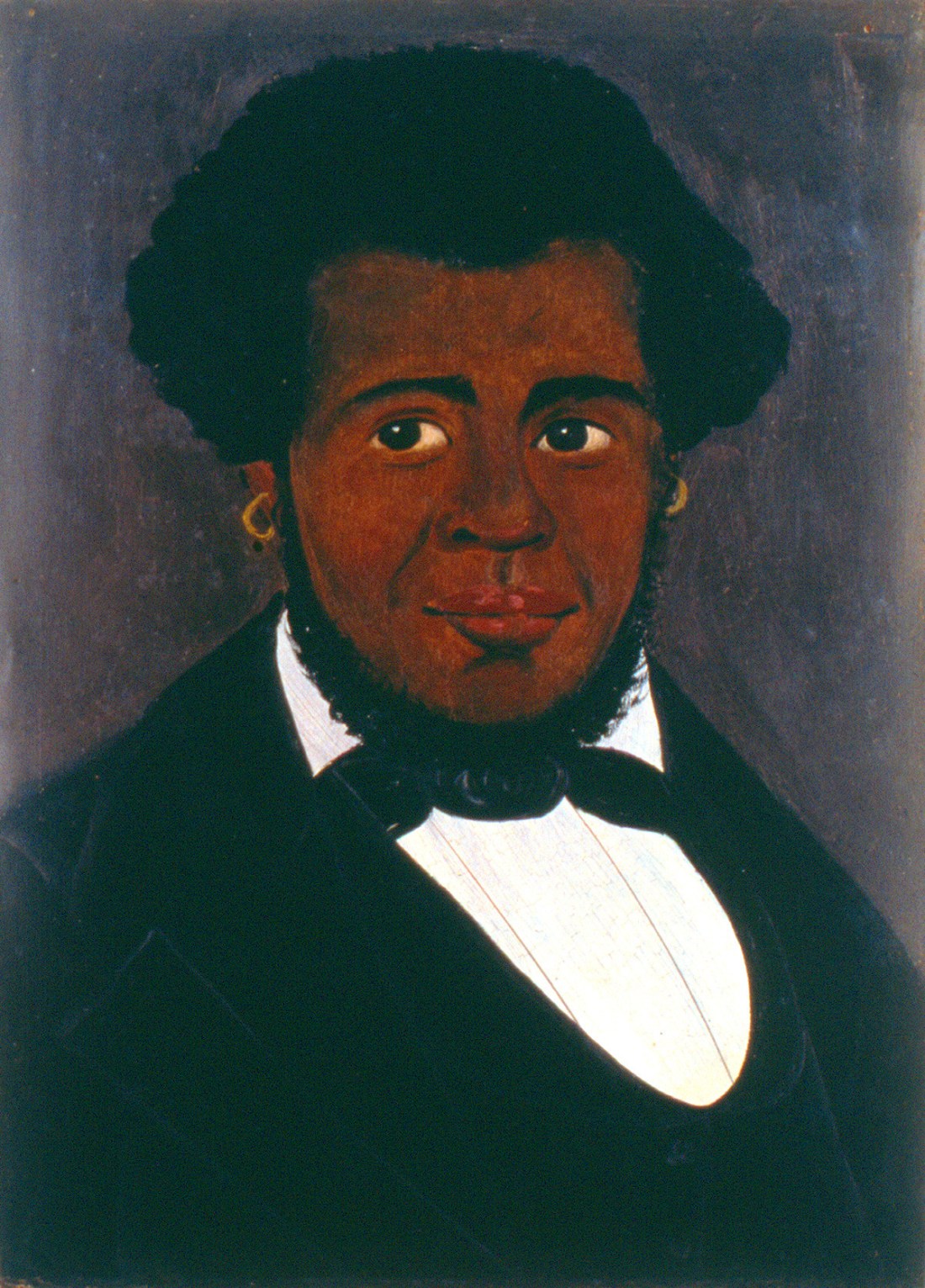
ABSALOM BOSTON!!!! honestly the best of 19th century whaling captains and a man who successfully campaigned to get ALL PUBLIC SCHOOLS IN MASSACHUSETTS INTEGRATED through organising boycotts and petitions in 1845 so that his daughter could get the best possible education!
let’s review his life!!
– his uncle was Prince Boston, who was the first enslaved man in Massachusetts to successfully win a court case for his freedom in 1773. His father Seneca Boston was also born into slavery; his mother, Thankful Micah, was Wampanoag and had probably got that name from surviving the epidemics to that community.
– went to sea age 15 in 1800 and managed to rise to captain (extremely difficult) and also, like, not die. captained the ship Industry with all African-American crew who remembered him so fondly that they WROTE A BALLAD ABOUT HIM. this is a rare level of affection for your captain; also no one died.
– promptly came home to Nantucket, opened a store, and became a community leader, careful investor, and prominent abolitionist alongside Captain Edward Pompey
– his daughter Phebe was denied entrance to high school in 1846, having only been permitted to study at the African Meeting House, a segregated school.
– there had been a protracted struggle over this since 1840 when Eunice Ross was denied entrance to the high school; for one brief moment in 1843 the School Board voted to integrate the schools, only to be immediately voted out and replaced with more racist school board members. Black families began a public boycott of the African Meeting House.
– in 1845 Edward Pompey had submitted a petition of over 100 signatures to the state legislature; a law actually got passed that all children had the right to access public education. but in practice the schools did not
– but it meant that Absalom Boston, who had at considerable personal peril made quite a lot of money at this point, was ready and willing to hire MULTIPLE LAWYERS and file a suit for his daughter Phebe and Eunice Ross
– the Town of Nantucket gave in!! And age 24 Eunice Ross got to start ninth grade
– I HAD NO IDEA PEOPLE WERE ORGANISING LIKE THIS IN 1845
Lol Red Guards are attacking Boots Riley on Twitter bc he said that ppl should vote for an end to California’s rent control ban lmfao
Holy shit, what a transparently myopic and ala is perspective! I can’t imagine being so fucking braindead as to think lobbing “you think reforms can be good” is an insulting phrase. It’s like they actively want conditions to worsen even more out of some freakish sense purity.
Oh they’re absolutely playing the “let all the poisons that lurk in the mud hatch out” strategy; which, even if you don’t suspect it of being an excuse to do nothing and claim it as a virtue, seems to me like playing chicken with other people’s lives.











 Mooncustafer