I also like the hypothesis that the upper classes are more likely to be conservative AND more likely to live to be older (due to access to better medical care, etc.)
do you ever want to stockpile your own blood over the course of a few years and then just go around and start spreading it everywhere before mysteriously disappearing, leaving suspicious amounts of blood throughout the city and turning your whole town into a crime scene which no one can adequately explain outside of somehow being murdered simultaneously at like eight taco bells?
i have never been okay once in my life
people keep tagging this “forensics would be able to tell it was old blood” to which I ask the question: would this knowledge bring any comfort to the employees of these many taco bells
In the 12th century, the residents of quiet Woolpit, England, recorded a story that has intrigued both historians and paranormal enthusiasts for years.
The story goes like this: two children, a boy and a girl, stumbled from one of the eponymous pits. Both children spoke an unidentifiable tongue and, more strangely, were green. The villagers took them in and tried to feed them, but the strange children wouldn’t eat. Only when they were brought green beans did they eat. Eventually, the girl grew stronger and learned the local language, but the boy sickened and died. The girl finally talked about where she came from–a strange place called St. Martin’s Land, where it was always twilight. She and her brother had apparently gotten lost and stumbled into Woolpit through–what? Another dimension? A timeslip? A worm hole?
What really happened? Some people theorize that the children were aliens, from an alternate dimension, or from a world below the earth’s surface. Historians are split on the issue, as some make a point on staying silent on the story and other dismiss the green children of Woopit as a folktale or a way for ancient historians to safely discuss sensitive topics.
One of the most widely accepted historical theories is that the children were from nearby Fornham St. Martin. Orphaned after their parents, Flemish immigrants, were killed, they became confused and malnourished and finally stumbled into Woolpit. No one is entirely sure, though, and it’s doubtful that we will ever be sure where the two children came from, or if they even existed at all.
I’d heard of this sofa, but had to look up the labelling, and wow, it really does feature a picture of an old-time pharmacist glaring intently and pointing at you.
you know what i don’t see enough of? circus kid dick grayson critiquing the joker because he’s a bad clown. not like, bad, and also a clown. but bad at being a clown. i want to see dick grayson taking the existence of this horrible clown very personally as a matter of professional pride. he has known clowns, and you, sir, are no clown. the joker is an insult to the legacy of emmett kelly and this shall not stand.
do you think they refuse because he’s not a real clown
like someone inquires about the joker and so they put out a press release to state that not only is he not registered with clowns international, they will not be accepting applications from the fucking joker, because he’s not even a clown and he doesn’t even wear makeup, you don’t get to register your regular-ass non-clown face
batman has to theoretically protect the fucking clown egg registry from the joker throwing a tantrum, but quite frankly he doesn’t have to do much because it’s the joker versus an army of real actual clowns defending the history of their noble profession
To think that I bought a copy of The Killing Joke when I could’ve held out for the *finest* Joker storyline.
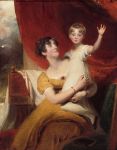
1.
George Romney, Portrait of Lady Anne Barbara Russell 1780
2.
Mrs. Marinus Willett and Her Son Marinus Jr., c.1802 by John Vanderlyn
3.
Mrs Benjamin West II with her son Benjamin West III (1805) by Benjamin West
4.
1810-1812 Jane, Lady Orde and her daughter Anna by Sir Thomas Lawrence
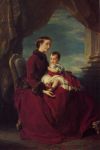
5.
The Empress Eugenie Holding Louis Napoleon by Franz Xavier Winterhalter
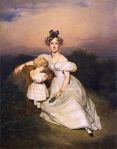
6.
Grand Duchess Sophie of Baden with Prince Wilhelm by Franz Xaver Winterhalter, 1831
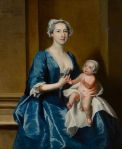
7.
Johanna, Mrs Robert Warner of Bedhampton, and Her Daughter, Kitty
(d.1772), Later Mrs Jervoise Clarke Jervoise, 1736, by Joseph Highmore
8.
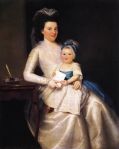
“Lady Williams and Child,” 1783,by Ralph Earl (1751-1801)
9.
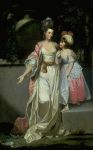
Joshua Reynolds, Mrs. Jelf Powis and her Daughter, 1777
10.
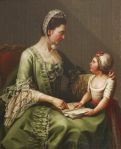
Elizabeth Davers (1730–1800), Countess of Bristol, and Her
Daughter Lady Louisa Theodosia Hervey (1770–1821), Later Countess of
Liverpool. Painted by Antonio de Bittio c. 1773.
That first one is so slice-of-life; I love it.
“This was the only way we could get her to stay in one place.”
I like the mom trying not to crack up over the kid’s glee at holding that piece of paper.






 Mooncustafer