and clearly i spend too much time on this site b/c i fell off the bed laughing. teratophilia is the desire to fuck a monster, monster fuckers are too ‘rare’ to get their own article
(did I wait until All Souls’ Day to answer this? yes. yes, I did.)
Anyway: for me, The Thing About Ghosts is that ghosts are about grief.
Not only the grief of continuing to live when someone you love has died, but also all the awful things the world asks us to endure. All the smaller deaths—the thousand natural shocks man is heir to, to borrow a phrase. The world asks us to stare, unblinkingly, at horrors, even the most sheltered among us can’t avoid disease, loneliness or fear, or death itself; a part of us feels that injustice keenly. But most of us go gently into that good night anyway, and manage what haunts us as best we can while alive—because misery exists, and people suffer more than we do, grieve more than we do. And we don’t want to deprive ourselves of future joy, just by trying to right the injustice of evil existing. We want to live, goddamn it, not spend every moment trying to kill a thing that won’t be killed.
But ghosts…don’t. They don’t live, or want to. So ghosts can exist as a misery pressed so hard into the landscape of the world it can’t leave, or won’t leave; it won’t be washed away or ignored. It demands an answer. It’ll exist and endure and warp the world around it until it gets an answer.
(I think a lot about how America really only started telling ghost stories after the Civil War—so many dead men who never made it home, an absence crying out for an answer.)
If you’ve ever lived with grief, or been close to someone enduring it, there is a kind of unreasonable monstrosity about it all. Grieving does not happen on a set schedule, it does not accommodate itself. It happens in weird, terrible and awkward ways, that don’t always make sense from the outside. Grief exists like a plague, like a curse, like a poltergeist, come to rearrange your shit and put the chairs on the ceiling. Grief possesses and alters and….you run out of verbs for it, after a while. But then, you’re supposed to run out of grief eventually, right? People expect you to come back, and move on, and—
Ghosts don’t. In that way, ghosts are realer than grief, proof of grief. That person you loved is still gone—you can point to the howling at 3am, the traditional witching hour, and prove it. The child you lost for no clear medical reason is still a unreasonable, senseless tragedy—they’re leaving their toys scattered on the floor every night, so you know. Sanitariums and mental asylums, where very ill people were done great wrong, are considered de rigueur haunted; ditto orphanages and prisons. A ghost is evidence that an absence is actually a presence and thereby, the grief and horror are justified.
Even more broadly, we can see the power of ghosts: Resurrection Mary, killed by a hit-and-run driver only to appear in ghostly fashion asking for a ride, is allowed to exist longer than most parents’ misery about their children killed by addictions. There are still ghost hunters listening for moaning from Massachusetts’ “the bloody pit” as though OSHA violations don’t result in roughly five thousand workplace deaths per year. North Dakota has White Lady Lane, where a young girl hung herself for her out of wedlock pregnancy and the religious parents who forced her to marry the father—today, ND is one of the most restrictive states when it comes to abortion regulations.
It’s about grief. It’s about an indelible mark of the world’s horrors. And as a consequence? Ghosts stick the fuck around, where even real human suffering doesn’t.
(Honestly, I don’t think it’s accidental that most of our ghosts are children and women. Even now, in this modern age, ghosts are about the injustice of misery demanding an answer, and those two groups have felt it more than any other.)
Don’t get me wrong. I really like vampires. I enjoy a good zombie. I’m a fan of cryptozoology, and I think unsolved mysteries are very neat. But when it comes to what I love—my absolute favorite of the horror tropes—it’s grief. And it’s ghosts.
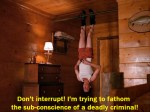
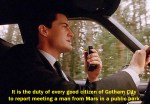
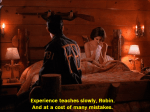
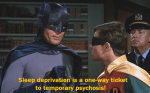
I don’t know whether to thank or curse the miracle of evolution that is the human brain for the millions of years of prioritizing pattern-recognition over instinct that led me to notice that Special Agent Dale Cooper’s speech patterns and physical mannerisms greatly resemble those of… Adam West’s Batman.




















 Mooncustafer