the-real-seebs:

alpine-insurrection:

mormonfries:

starlight-lilith:

I know it’s not hard to point out reactionaries hypocrisy when it comes to like safe spaces or hug boxes or whatever but genuinely how much of an echo chamber do you have to exist in for you to think this is a reasonable thing to say

reblog if attacking fascism is really the hill you want to die on

this is literally like one of the most justified and honorable hills you could die on??? lol??

after careful study of the alternatives, i would ask anon to consider: do you have much of a choice, if you’re not willing to be the fascist?

darkersolstice:

capriceandwhimsy:

thefingerfuckingfemalefury:

thyme-for-a-nap:

thefingerfuckingfemalefury:

emphasisonthehomo:

voxiferous:

memecucker:

ace-and-ranty:

memecucker:

what if i told you that a lot of “Americanized” versions of foods were actually the product of immigrant experiences and are not “bastardized versions”

That’s actually fascinating, does anyone have any examples?

Chinese-American food is a really good example of this and this article provides a good intro to the history http://firstwefeast.com/eat/2015/03/illustrated-history-of-americanized-chinese-food

I took an entire class about Italian American immigrant cuisine and how it’s a product of their unique immigrant experience. The TL;DR is that many Italian immigrants came from the south (the poor) part of Italy, and were used to a mostly vegetable-based diet. However, when they came to the US they found foods that rich northern Italians were depicted as eating, such as sugar, coffee, wine, and meat, available for prices they could afford for the very first time. This is why Italian Americans were the first to combine meatballs with pasta, and why a lot of Italian American food is sugary and/or fattening. Italian American cuisine is a celebration of Italian immigrants’ newfound access to foods they hadn’t been able to access back home.

(Source: Cinotto, Simone. The Italian American Table: Food, Family, and
Community in New York City
. Chicago: U of Illinois, 2013. Print.)

Stuff you Missed in History Class has a really good podcast overview of “Foreign Food” in the US.

I LOVE learning about stuff like this 😀

that corned beef and cabbage thing you hear abou irish americans is actually from a similar situation but because they weren’t allowed to eat that stuff due to that artificial famine

❤ FOOD HISTORY ❤

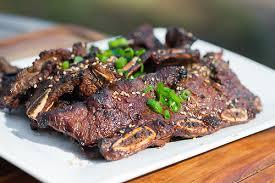
Everyone knows Korean barbecue, right? It looks like this, right?

image

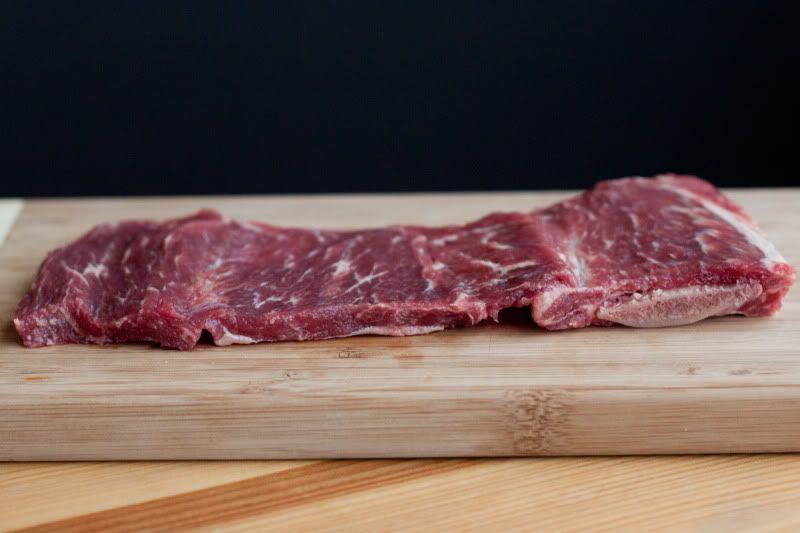
Well, this is called a “flanken cut” and was actually unheard of in traditional Korean cooking. In traditional galbi, the bone is cut about two inches long, separated into individual bones, and the meat is butterflied into a long, thin ribbon, like this:

image

In fact, the style of galbi with the bones cut short across the length is called “LA Galbi,” as in “Los Angeles-style.” So the “traditional Korean barbecue” is actually a Korean-American dish.

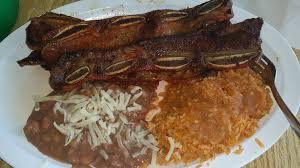
Now, here’s where things get interesting. You see, flanken-cut ribs aren’t actually all that popular in American cooking either. Where they are often used however, is in Mexican cooking, for tablitas.

image

So you have to imagine these Korean-American immigrants in 1970s Los Angeles getting a hankering for their traditional barbecue. Perhaps they end up going to a corner butcher shop to buy short ribs. Perhaps that butcher shop is owned by a Mexican family. Perhaps they end up buying flanken-cut short ribs for tablitas because that’s what’s available. Perhaps they get slightly weirded out by the way the bones are cut so short, but give it a chance anyway. “Holy crap this is delicious, and you can use the bones as a little handle too, so now galbi is finger food!” Soon, they actually come to prefer the flanken cut over the traditional cut: it’s easier to cook, easier to serve, and delicious, to boot! 

Time goes on, Asian fusion becomes popular, and suddenly the flanken cut short rib becomes better known as “Korean BBQ,” when it actually originated as a Korean-Mexican fusion dish!

I don’t know that it actually happened this way, but I like to think it did.

Corned beef and cabbage as we know it today? That came to the Irish immigrants via their Jewish neighbors at kosher delis.

https://www.smithsonianmag.com/arts-culture/is-corned-beef-really-irish-2839144/

The Irish immigrants almost solely bought their meat from kosher butchers. And what we think of today as Irish corned beef is actually Jewish corned beef thrown into a pot with cabbage and potatoes. The Jewish population in New York City at the time were relatively new immigrants from Eastern and Central Europe. The corned beef they made was from brisket, a kosher cut of meat from the front of the cow. Since brisket is a tougher cut, the salting and cooking processes transformed the meat into the extremely tender, flavorful corned beef we know of today.

The Irish may have been drawn to settling near Jewish neighborhoods and shopping at Jewish butchers because their cultures had many parallels. Both groups were scattered across the globe to escape oppression, had a sacred lost homeland, discriminated against in the US, and had a love for the arts. There was an understanding between the two groups, which was a comfort to the newly arriving immigrants. This relationship can be seen in Irish, Irish-American and Jewish-American folklore. It is not a coincidence that James Joyce made the main character of his masterpiece Ulysses, Leopold Bloom, a man born to Jewish and Irish parents. 

what do u think the main les mis characters would do in a modern au

bobavader:

eponine would sell overpriced weed to valjean because she thinks he’s a rich sucker who’ll accept $50 a gram until she sees what she thinks is him killing javert in cold blood and then hears that he’s a hardened criminal and then panics because she’s been ripping him off this whole time and tries to skip town and valjean just wants to know where the nice kid with the weed went. everything else is irrelevant 

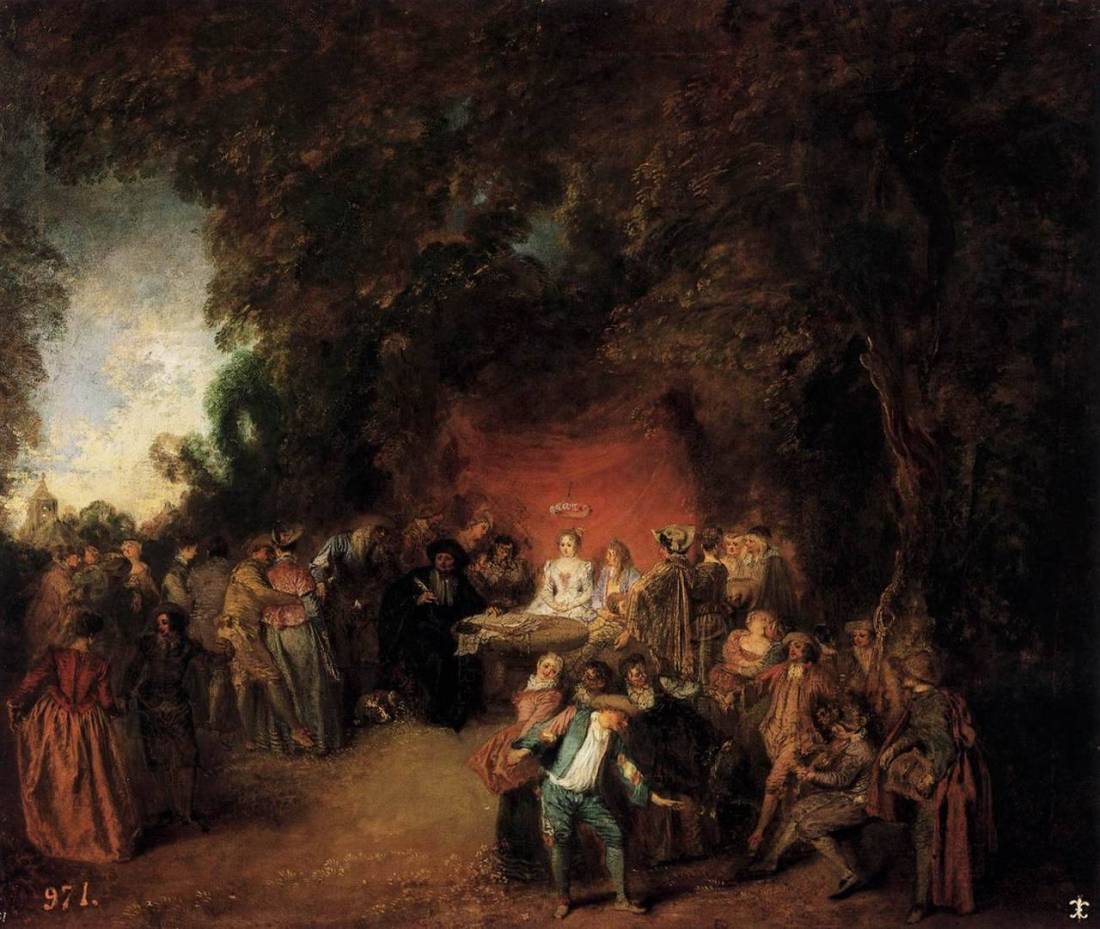
artist-watteau:

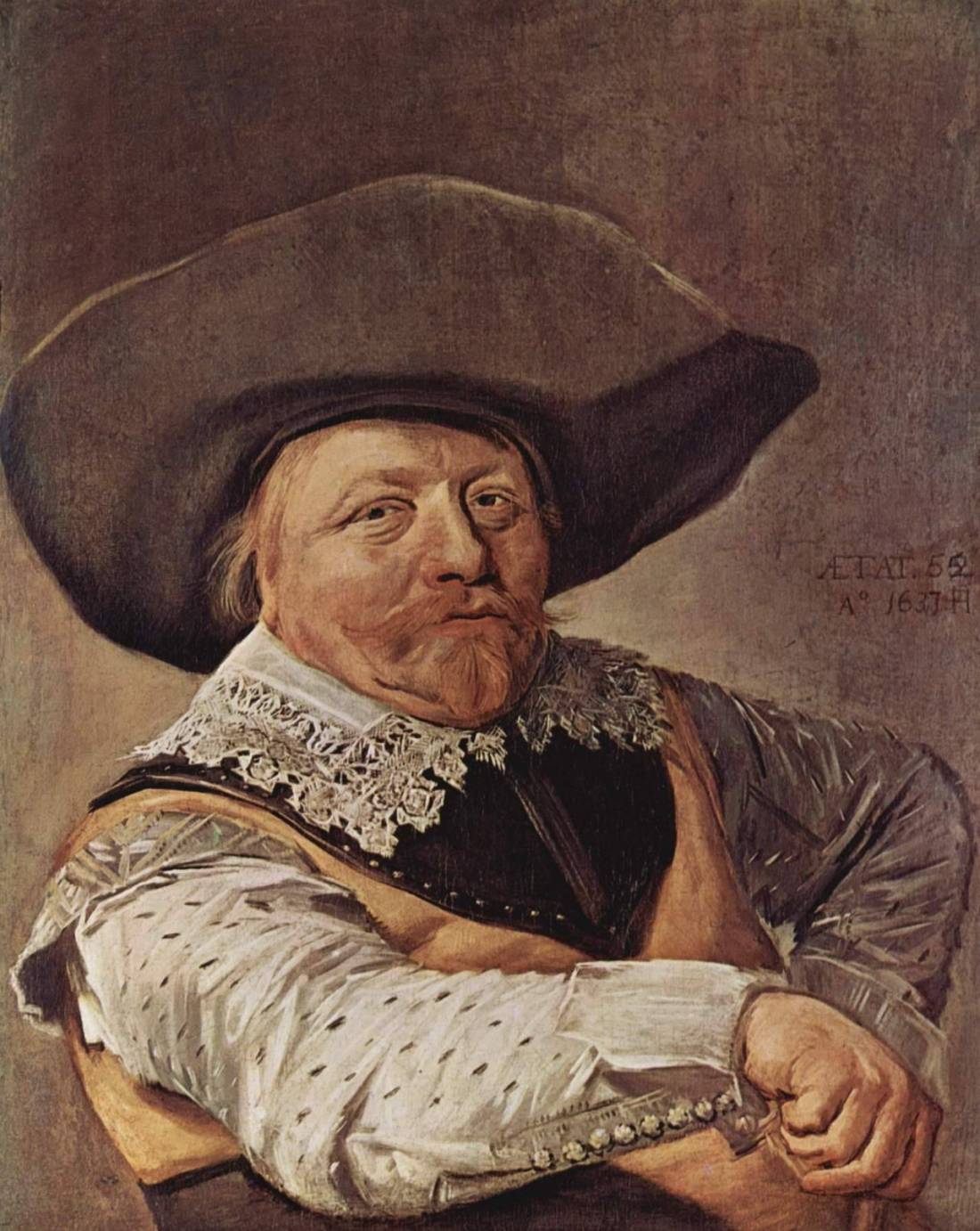
The Marriage Contract, Jean-Antoine Watteau

https://www.wikiart.org/en/antoine-watteau/the-marriage-contract-1712

I know fêtes galantes were
Watteau’s specialty to the point where the genre was basically created for him
but literally every one of his paintings, no matter the title, is of a bunch of
costumed people hanging out in a parklike landscape. Need to process a marriage
contract? Our registry office is conveniently located in a grove, gentlefolk.

fuckyeahdnd:

machine-dove:

prokopetz:

I love it when Icelandic sagas attribute every microscopic inconvenience that befalls a hero on his journeys to “witchcraft”. It makes me picture a really bored witch just micromanaging the hell out of this one particular guy’s daily travails.

My favorite bit of Icelandic saga is when one dude’s house is invaded by not one, but two bands of zombies (because he pissed off a witch, obviously), which did such terrible zombie things as taking the best spots by the fire and throwing clods of dirt at each other.

The homeowner, being a fine upstanding Icelandic farmer/warrior type, did what you’d expect a Viking warrior to do when faced with invading zombies.

He sued them.  In court.  With lawyers.  As one does.

“Your honor, I might be just a simple Suđreyjar lawyer, but…”

In Response to the Ahistorical and Inaccurate

havencraft:

I recently went to see a forum where a Pagan speaker was representing Paganism in an interfaith context. Before that, I attended Pagan Pride earlier in the month.

In response to the ahistorical and inaccurate statements I’ve now witnessed repeatedly, let me just say:

1. Not all Pagans are witches and certainly not all witches are Pagan. Seriously, there are secular, atheist, agnostic, humanist, Christian, Jewish, etc witches. They do not identify as Pagan. 

2. Not all Pagans worship a God and Goddess. Certainly, they do not all believe that all gods and goddesses are faces for such. 

3. Not all Pagans believe in or worship “Mother Earth.”

4. Not all Pagans believe in a strict duality of “masculine energy” and “feminine energy.” In fact, historically speaking, most of them didn’t. Gender essentialism is not found in every path. It’s transphobic and erasing, non-binary phobic and erasing, and really damaging even to those who do identify with the gender they were designated at birth. 

5. Many Pagans do not all follow “Harm None” or the “Rule of Three”. That’s a Wiccan thing and even then, not an “All Wiccans” thing. 

6. Some of us practice cursing. Stop “No True Scotsmanning” the practice. Stop calling it “black magick”, that’s racist.  

7. No, cursing is not the same thing as hexing. Hex is just the German and Pennsylvania Dutch word for spell. Hence hexenmeister meaning spell master. Saying a hex is always a curse is like saying a spell is always a curse. 

8. There was no great period of a grand unified Witch Cult that all got along and worshiped the same before the evil Christian men came along. Pagans killed each other over whose gods were better. Gods were used in propaganda machines – many of our myths boil down to, “My god can beat up your god.” Also, Rome burned witches long before it was Catholic. 

9. Flying ointment is not applied via the vagina using a broom handle. Don’t do that. That is a fantastic way to absorb poisons through a mucous membrane and get splinters. Seriously, that’s how you get splinters in your vagina. Or die. Or both.

10. I am less concerned about the persecution of affluent, white, ciscentric, heteronormative, gender essentialist, psuedo-liberal Paganism than I am about the ongoing oppression, exclusion, erasure, and appropriation of other cultures by modern Paganism and the ongoing problems with sexual misconduct by Pagan leaders. No, your persecution complex really, really doesn’t override any of those concerns. 

11. There is no Witch Pope. No one can excommunicate a witch for not witching the way they want them to witch. Please stop saying there is only one way to witch and that you speak for it.