…I just woke up from a dream in which there was an app that notified you when nearby LARPs needed an NPC, and you could, like, go pretend to be a surly shopkeeper or whatever and get paid, like, $10 for it.
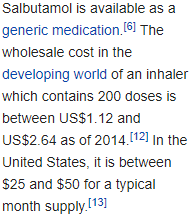
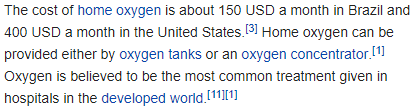
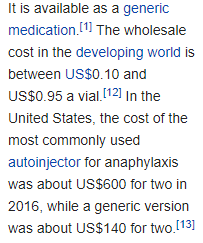
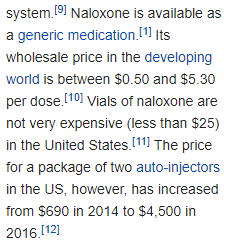
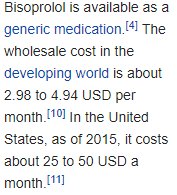
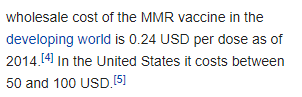
So I was doing some research on common medications for a pharmacology class at school, and realized that Wikipedia is calling out the outrageous practices of pharmacological sales in the US. Right up there in the main intro to the medication they’re showing how much the drug costs to produce, versus how much a typical course of treatment costs in the USA.
Also, just so you’re aware, as of late Mat 2018, 1.80 GBP is 2.40 USD. For a three month supply of the pill. The same amount could cost you 150 USD in the United States.
sunrise: pick a quote and describe what it means to you personally.
Sarah Flower Adams, with the obvious selection. I’ll have you know that I picked three prime depression!blogging hymns for these asks and not a one of ‘em was by Cowper. I am the model of restraint!
Though like the wanderer, the sun gone down, darkness be over me, my rest a stone;
There let the way appear, steps unto heaven; all that thou sendest me, in mercy given;
Then, with my waking thoughts bright with thy praise, out of my stony griefs Bethel I’ll raise.
Sheer oversaturation is probably to blame here, but I can’t quite get over the ratio of how ~culturally present~ “Nearer, my God, to thee” is to how many performances/recordings/references seem to proceed from the notion that it’s lyrical. The unusual structure doesn’t help; you can see my creative editing above. Yet it’s very much a narrative hymn. You can’t just leave strophes out and expect it to make sense as pure imagery!
Moreover–not like I have a type or anything, *cough, cough*–it’s another narration of an event in Ya’aqov’s life, this time of the dream on the way to Haran. The conflict between a typically Christian text and typically Jewish exegeses has created a rich amalgam of associations for me. As the chorus makes clear, this is a text about aspiration. At every moment the speaker longs to be closer to God and finds that times of darkness and discomfort are actually when the upward path becomes most clearly illuminated. Even the close association that’s built up between this text/tune and tragedy hasn’t done much to erase the comforting teleology of it all: there’s a Goal™, and perhaps in grief you lose sight of it, but afterwards you discover that you were still moving forward after all. Everything is built on the faith that you, personally, are going to get there sometime.
And then I think of the first interpretation that I ever heard of the ladder dream, which is that each rung represents a new exile. (I’m aware that this isn’t the only classic midrash on this text, but it’s a popular one and always the first to my mind.) To read that whole passage in Vayetse from this starting point is astonishing. Ya’aqov sees (“in mercy given”) a revelation of immense suffering for himself and his descendants, wakes up, and exclaims, “Surely Hashem is in this place, and I knew it not; this is none other than the house of g-d and the gate of heaven.” I was blogging yesterday–for unrelated reasons–about that pasuk from Michah, “ki-’eshev bahoshech hashem ‘or li.” To my mind, this part of Vayetse holds up to that, or to Iyov’s “umivshariy ‘ehezeh elohah,” as an expression of inexplicable loyalty to the g-d of one’s ancestors. Practically, logically, these reactions do not make sense, least of all in a relationship of mutual obligation, but there is something capital-G Good about them to me.
There’s a big difference between being able to say, “I am like a wanderer,” and actually wandering. Look at Avram. He, too, awakes in dread to the words of a god that promises to make a people of him. He is warned that his descendants will be exiled and enslaved, but told that he himself is safe: “But you shall go to your fathers in peace; you shall be buried in a good old age.” Ya’aqov is already on the road. When Hashem extends him a covenant, he asks for the same benefit that was promised to his grandfather: to come home in peace. That’s not the first thing he thinks of, though. He asks for food and clothing. I think he’s asking for one more day. And when Ya’aqov adds his own conditions to the bargain, he doesn’t hear an answer back. The essence of the promise he has been offered is “I will not leave you until I have done that which I have spoken of.” Well, what the hell worth is that? But, like seeing the work of g-d through my corrupted flesh, I guess I’ll take it.
Darting between how I know a British Unitarian in the 1840s would have reacted to this hymn and how I do reads like a contraction of horizons, a deferment of hopes.
In both there is the anticipation of pain and the promise of homecoming. A Christian wants (expects!) heaven, glory, eternal life. I want a little comfort on the road and for something to tell me, from time to time, that my people will be able to rest their feet someday.
A wandering Aramean was my father; he went down into Egypt and sojourned there. And I, still on the road to Haran, name it, in gratitude for one more day, “home of g-d.”
It’s missing strophes, but I can’t not give you the Cooper Book version of “Bethany,” which even I must admit (publicly! on my famously anti-Masonic blog!) to be among Lowell Mason’s very best tunes.
One of the major shortcomings of liberalism is the way it treats racism, sexism, and other forms of prejudice as character flaws rather than inevitable superstructural manifestations of the systems of white supremacy, patriarchy, and capitalism. It shifts the moral failing onto the individual and away from society as a whole, so systemic inequality can continue to exist as long as we crucify the occasional bigot for show.
Hm. Like shaming individuals for littering rather than stopping
paper mills (frex) from dumping effluent in the rivers?










 Mooncustafer